
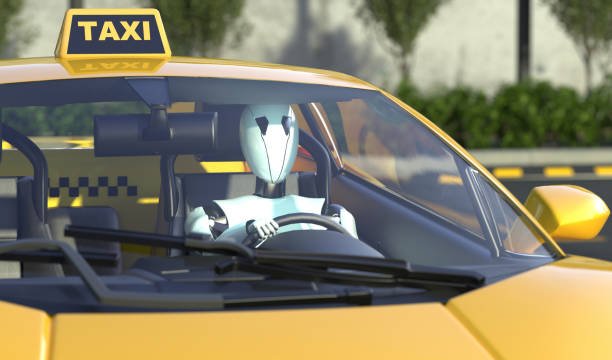
Robotaxi news is moving faster in 2026 than most people expected. A year ago, self-driving taxis felt like a technology that was always five years away. Today they are pulling up to the curb in a growing list of cities, picking up real passengers, and charging real fares. Waymo is completing hundreds of thousands of rides every week. Tesla just expanded its robotaxi service to Dallas and Houston. Uber is spending 0 billion to make sure it does not get left behind. And Amazon, Zoox, and a handful of European players are all making moves at the same time. If you want to understand what is actually happening in the autonomous vehicle market right now, this is the complete picture.
What Is a Robotaxi and Why Does It Matter Now
A robotaxi is exactly what it sounds like. It is a vehicle that picks you up and drives you to your destination with no human driver behind the wheel. No one monitoring from the back seat. No safety operator with a hand near the wheel. Just software, sensors, and cameras making every decision in real time.
For years this was a research project. Companies spent billions testing the technology in closed environments, running simulations, and slowly expanding to limited public pilots. The general public was mostly kept at a distance.
That changed in 2023 when Waymo opened its service to anyone in San Francisco. It changed again in 2024 when the service expanded to Los Angeles and Austin. And in 2026, the pace has accelerated to the point where multiple companies are competing for passengers in the same cities at the same time.
This matters because autonomous vehicles are not just a transportation story. They are a technology story, a business story, a regulatory story, and a story about what cities are going to look like in ten years. The decisions being made right now, about which companies survive, which technology standards win, and how governments choose to regulate all of it, will shape daily life for hundreds of millions of people.
Waymo: Still Leading, Now Expanding Fast
If you want to understand the robotaxi market in 2026, start with Waymo. Every other company is either chasing it or trying to work around it.
Waymo has extended its driverless taxi service to 10 metro areas and executives are targeting 1 million weekly rides by the end of 2026. That is a significant jump from where the company was just twelve months ago. Waymo launched operations in Miami and said it will add service in Dallas, Houston, San Antonio and Orlando in the coming weeks, with the goal of taking passengers in those cities in 2026.
The company global ambitions are equally serious. Waymo plans to roll out its service in more than 20 cities worldwide in 2026, including Tokyo and London. The London launch is particularly significant because it marks the first time a US robotaxi operator has entered a major European market, and it signals that this is becoming a genuinely global industry rather than a US-only story.
The financial backing matches the ambition. Waymo raised 6 billion in one of the largest startup funding rounds in history. That money is not funding a prototype. It is funding the geographic expansion of a product that is already operational at scale.
Despite the momentum, Waymo is not without problems. Regulators are reviewing certain driving behaviors, including interactions with school buses and a low-speed collision involving a child. Expanding into new cities also requires navigating a patchwork of state and local regulations that vary widely across the country. Each new market is its own approval process, its own infrastructure buildout, and its own set of local political dynamics.
Tesla Robotaxi: Big Promises, Real Questions
Tesla approach to robotaxis is completely different from Waymo, and that difference tells you a lot about why the race is so interesting.
Unlike Waymo, which relies on costly LiDAR sensors for depth perception and remote human operators to handle edge cases, Tesla is betting on a far cheaper and more controversial approach: cars that can operate autonomously in all conditions, guided entirely by cameras.
The cost argument is genuinely compelling. If Tesla can make it work, its vehicles will be dramatically cheaper to produce and operate than Waymo. That would change the economics of the entire industry. The question is whether the camera-only approach is actually safe enough to scale.
Tesla recently expanded its robotaxi service to Dallas and Houston following its initial launch in the San Francisco Bay area. Despite the push for rapid national deployment, the expansion has been met with skepticism due to missed timelines and recurring safety concerns. A federal regulatory filing revealed that Tesla Austin-based pilot fleet was involved in 14 collisions during its initial phase.
In late 2025, Elon Musk projected that Austin would host 500 Tesla robotaxis by year end. That target was not met. Broader ambitions such as serving half of the US population also remain unrealized. At present, Tesla fully driverless service is confined to a small number of cities, operating modified Model Y vehicles.
On the hardware side, Tesla two-seater Cybercab went into production in April 2026. The dedicated robotaxi has no driver controls such as pedals or a steering wheel. Musk expects the Cybercab to become Tesla highest-volume vehicle, noting that most car trips carry one or two people.
The regulatory environment is also creating headaches for Tesla specifically. California is threatening to ban sales of Tesla vehicles after a judge found the company had engaged in deceptive marketing around its full self-driving and autopilot systems, falsely implying they were fully automated. That is a serious problem for a company trying to scale a robotaxi service at the same time.
Uber: The Platform Play
Uber strategy is different from both Waymo and Tesla, and arguably smarter for where the market is right now.
Rather than building its own autonomous vehicle from scratch, Uber is positioning itself as the platform that connects passengers with whatever robotaxi fleet is available in their city. The company is hoping to become the world largest facilitator of autonomous vehicle trips by 2029.
The numbers behind this strategy are serious. Uber total investment in robotaxis could include more than .5 billion for robotaxi fleets and about .5 billion in equity investments, with deals linked to deployment milestones. The company has accelerated partnerships globally, working with several autonomous vehicle providers including Baidu, Rivian, Lucid Motors and others.
The results so far are encouraging. In Austin and Atlanta, where Waymo robotaxis operate on Uber network alongside human drivers, Uber reported 30% more trips per vehicle per day and 25% shorter wait times compared with robotaxi-only platforms.
The risk is obvious. If Waymo and Tesla bypass Uber to run their own robotaxi networks, Uber risks being cut out of the value chain entirely. Uber is essentially betting that the robotaxi market will be too fragmented for any single player to dominate, and that a neutral platform connecting multiple providers will always have a place. That bet might be right. It might also be the kind of bet that looks smart until suddenly it does not.
Zoox, Wayve, and the Other Players Worth Watching
The race is not just between Waymo, Tesla, and Uber.
Amazon-owned Zoox has begun inviting people from its waitlist to take free rides in parts of San Francisco and plans to launch a paid robotaxi service in the city in the latter half of 2026. The company currently operates around 50 robotaxis in San Francisco and Las Vegas. Because Zoox built its vehicle from scratch instead of retrofitting a commercially available car, it has a bigger battery and does not need to charge multiple times a day, meaning the fleet can spend more time collecting fares.
In Europe, Uber and autonomous vehicle company Wayve have announced a partnership to launch trials of fully autonomous robotaxis in London starting in spring 2026. This is the first major deployment under their multi-year agreement and will involve integrating Wayve AI software into vehicles on the Uber platform.
China Baidu is also moving fast. Baidu Apollo Go has completed millions of rides across cities like Beijing, Wuhan, Guangzhou, and Shenzhen, and plans to reach 100 cities globally by 2030. Apollo Go also recently reached the 250,000 rides per week milestone.
San Francisco: The Most Competitive Robotaxi Market in the World
One city has become the clearest window into what happens when multiple robotaxi services compete head to head.
In 2026, San Francisco could become the only city in the world where riders can choose among four robotaxi services, with Waymo, Tesla, Zoox, and Uber all operating or planning to operate in the same market.
That level of competition in a single city is genuinely unprecedented for the autonomous vehicle industry. It will produce real data on which technology approaches work better in dense urban environments, which pricing strategies attract riders, and how consumer behavior changes when autonomous options are widely available.
What This Means for Regular People
All of this technology and investment eventually comes down to a simple question. What does it mean for someone who just needs a ride?
Right now, if you live in San Francisco, Los Angeles, Phoenix, Austin, Atlanta, Miami, Dallas, or Houston, you can already request a Waymo ride with no human driver. In some of those cities you can also request a Tesla robotaxi. The experience is real, not a demo.
Pricing is still a mixed picture. Waymo currently prices its rides higher than standard ride-hailing in most markets. Tesla is pricing lower, partly as a market penetration strategy. As fleets scale and competition increases, prices should come down, though that will take time.
Safety remains the most important question for most people. The honest answer is that Waymo safety record is genuinely strong at this point, with hundreds of millions of autonomous miles logged and a collision rate that compares favorably to human drivers. Tesla record is less clear and more contested. The regulatory investigations are real and the public deserves transparent data before trusting a product at scale.
The broader implications for jobs, city infrastructure, and urban planning are significant and will take years to fully play out. For a deeper look at how AI regulation is shaping the rules around autonomous systems, the current picture is covered in our article on AI Regulation News Today 2025.
What Comes Next: Robotaxi in 2027 and Beyond
The next twelve months will be decisive.
Waymo push toward 1 million weekly rides by end of 2026 is the clearest near-term benchmark in the industry. If it hits that number, the commercial viability of full autonomy at scale will be beyond serious dispute.
Tesla Cybercab production ramp is the other major story to watch. If the vehicle proves reliable in real-world conditions and the camera-only approach holds up, Tesla cost advantage could reshape the competitive landscape quickly. If safety issues continue to pile up, the regulatory and reputational damage could take years to repair.
Uber platform strategy will be tested as Waymo and Tesla build out their own direct-to-consumer apps and reduce their dependence on third-party networks. The company has the distribution advantage today. Whether it can hold that advantage as the market matures is the central question for its autonomous vehicle future.
Internationally, the London and Tokyo launches planned for 2026 will be the first real test of whether the US robotaxi model can be exported successfully to cities with very different infrastructure, regulations, and driving conditions.
The technology is here. The business models are being stress tested in real time. And the winner of this race will help define how cities move for the next generation.
Also Read
AI Regulation News Today 2025: Latest Updates on EU AI Act, US Rules and Global Impact
Browser Agent Security Risk 2026: What AI Browsers Are Doing to Your Data
Frequently Asked Questions
Where can I ride a robotaxi right now?
Waymo operates in San Francisco, Los Angeles, Phoenix, Austin, Atlanta, Miami, Dallas, and Houston. Tesla robotaxis are running in Austin, Dallas, and Houston. More cities are being added throughout 2026.
Is Waymo or Tesla robotaxi safer?
Waymo has the stronger documented safety record, with hundreds of millions of autonomous miles and a collision rate that compares well against human drivers. Tesla record is more contested, with ongoing regulatory investigations into its Austin fleet.
How much does a robotaxi ride cost?
Waymo rides are currently priced slightly higher than standard ride-hailing. Tesla is pricing lower. Both companies are expected to lower prices as their fleets scale.
Will robotaxis replace Uber and Lyft?
Not immediately. Uber is actually partnering with robotaxi companies rather than competing directly, positioning itself as the platform that connects passengers with multiple autonomous fleets. Lyft has similar partnerships in place.
When will robotaxis come to my city?
Waymo is targeting more than 20 cities globally in 2026, including London and Tokyo. Tesla has announced plans for over 30 cities by end of 2026, though the company has a history of missing its own timelines.
Are robotaxis good for the environment?
Most robotaxis currently operating are fully electric, which reduces direct emissions. The broader environmental impact depends on the energy source used to charge them and how they affect overall traffic patterns in cities.
Conclusion
The robotaxi industry stopped being a future story in 2026. It is a present story now, playing out in real cities with real passengers and real money on the line.
Waymo is ahead, but the gap is narrowing. Tesla is pushing hard despite its problems. Uber is spending billions to stay relevant. Zoox, Wayve, Baidu, and a growing list of others are all building real operations in parallel.
The next ride you take in a city that has these services available might have no one in the front seat. That is not a prediction anymore. It is just Tuesday.
Primary Keyword: robotaxi news | Secondary Keywords: waymo robotaxi 2026, tesla robotaxi news, uber autonomous vehicle, self driving taxi 2026, robotaxi cities 2026