
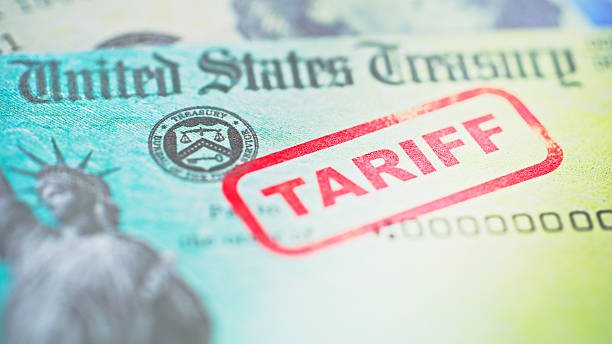
Nobody in Washington uses the word “tariff” the way Donald Trump does. He called it the most beautiful word in the dictionary. He built his entire second-term trade policy around it. And in 2026, he has been delivering on that promise in ways that are reshaping what Americans pay for everything from medication to cars to a can of beer.
This is not abstract economics. This is the story of a president who decided that the way America trades with the world needed to be torn apart and rebuilt from scratch and the story of what happens when that decision hits real businesses, real supply chains, and real household budgets.
Here is where Trump tariff news stands in April 2026, and what it actually means.
The April 2 Proclamations That Changed Everything
April 2, 2026 was a busy day at the White House. Trump signed two separate proclamations that reshaped the tariff landscape in significant ways — and both of them are going to be felt for years.
The first one dealt with metals. Steel, aluminum, and copper tariffs were restructured and strengthened. Under the new rules, articles made entirely or almost entirely of aluminum, steel, or copper now pay a flat 50% tariff on their full value. Derivative articles things substantially made of those metals — pay a flat 25%. The White House framed this as a national security measure, pointing out that in 2025, the United States became the third largest steel producing nation in the world something the administration credits directly to its tariff program.
The second proclamation was the one that caught the pharmaceutical industry off guard. Trump issued a proclamation that will impose a new 100% tariff on imports of patented pharmaceutical products and their ingredients. That number 100% is not a typo. It is the headline rate, though the actual structure is more complicated than that single figure suggests.
The new pharma tariffs come into effect in 120 days for certain large companies and 180 days for others. If a pharmaceutical product is from the EU, Korea, or Switzerland, a 15% tariff will apply instead. For the UK, the rate is lower still, based on a recently concluded bilateral agreement. Companies that agree to move their manufacturing to the United States and sign pricing agreements with the Department of Health and Human Services get a 0% rate through 2029. That last part is the real mechanism here it is less a tax and more a lever designed to force drug companies to build factories on American soil.
What the Supreme Court Did and What It Did Not Do
Before going further, there is a legal development that matters enormously to understanding where Trump tariff news stands right now.
The US Supreme Court in February 2026 struck down the IEEPA tariffs. IEEPA the International Emergency Economic Powers Act was the legal authority Trump had been using for a broad sweep of tariffs on countries around the world. The court ruling invalidated that specific authority. It was a significant legal loss for the administration.
But here is what the ruling did not do: it did not touch the Section 232 tariffs, which are the ones covering steel, aluminum, copper, pharmaceuticals, semiconductors, and autos. Those are still fully in place. The aluminum, steel, copper, lumber, and semiconductor tariffs do not stack on top of any applicable Section 122 tariffs. The legal architecture that survived the Supreme Court challenge is actually the most consequential part of the tariff program the industry-specific, national-security-framed measures that affect the goods Americans buy most.
Starting April 20, 2026, US Customs and Border Protection is opening a refund process for importers who paid IEEPA tariffs before the court ruling. That process is going to be complicated and slow, but it is real money for companies that paid duties that have now been ruled unlawful.
What This Is Costing Ordinary Americans
All of this policy talk has a very direct translation into what people are actually paying.
The Tax Policy Center estimates that tariffs will raise about $911 billion in fiscal years 2026 through 2035, with $185 billion raised in 2026 alone. That money does not come from foreign governments. It comes from American importers, who pass it on to American consumers.
TPC estimates that tariffs announced by the Trump administration impose an average burden of about $1,050 per household in 2026. That burden is not evenly distributed. The average federal tax rate rises by 0.9 percentage points for households in the bottom quintile — compared with a 0.7 percentage point increase for those in the top quintile. In plain English: lower-income families are paying a higher proportion of their income in tariff costs than wealthy ones.
The impact on specific companies has been stark. Procter & Gamble said it had to raise prices on 25% of its products due in part to a $1 billion total annual tariff impact. Constellation Brands, the beer maker, estimated a $20 million hit to its 2026 earnings from tariffs on aluminum alone — aluminum being what their cans are made of. These are not small companies being squeezed. These are some of the largest consumer goods manufacturers in the world, and they are passing the costs on.
The automotive sector has been one of the most closely watched. US tariffs cost GM $3.1 billion in 2025, below the company’s previous expectations of between $3.5 billion and $4.5 billion. GM’s CFO said the company expects its net tariff burden to actually be lower in 2026 than in 2025, partly because the administration agreed to stop stacking tariffs on top of each other for auto parts. That is a real concession, and it reflects the reality that even an administration committed to aggressive tariffs has to manage the political fallout when major American employers start announcing layoffs.
The China Threat That Keeps Hanging in the Air
The most volatile piece of Trump tariff news in April 2026 is not any of the measures that have already been signed. It is the threat that has not yet been acted on.
Trump threatened to impose a 50% tariff on China after reports emerged that Beijing was preparing to deliver a shipment of air defense systems to Iran. He made those comments in a televised phone call with Fox News, framing it as a conditional threat — if China actually delivered the weapons, the tariff would follow.
What makes this significant is the context. Trump is slated to meet with Chinese President Xi Jinping in a summit in Beijing on May 14 and 15. That meeting is now carrying enormous weight. Trade negotiators on both sides are trying to figure out whether the tariff threat is genuine positioning ahead of the summit or genuine policy. The answer to that question determines whether the two largest economies in the world move toward a trade deal or deeper into a trade war.
China’s response has been careful. Beijing pressed Iran toward a ceasefire in the recent US-Iran conflict and has been signaling its willingness to engage diplomatically. Whether that translates into concessions on the weapons question — and whether those concessions are enough to keep the 50% tariff threat off the table — is the most important unanswered question in global trade right now.
What the Pharma Tariffs Mean for Your Medicine Cabinet
The 100% pharmaceutical tariff deserves its own attention, because the implications for ordinary Americans are real and they have not been fully absorbed by the public conversation yet.
The United States imports a significant portion of its prescription drugs and drug ingredients from countries like India, China, and Ireland. A 100% tariff on those imports does not mean drug prices double overnight — the phase-in period and the exemptions for companies that commit to US manufacturing give the industry time to adjust. But the direction of travel is clear.
Before the formal tariff announcement, pharmaceutical companies had already started reacting. AbbVie said it will put more than $10 billion into US manufacturing over the next decade, including building four new plants. Johnson & Johnson committed to spending more than $55 billion to build four plants in the US. These are enormous numbers, and they reflect companies making a rational calculation that the cost of building American factories is lower than the long-term cost of paying 100% tariffs on imported drugs.
The question nobody has a clean answer to is what happens to drug prices during the transition. New factories take years to build. The tariffs kick in before those factories are operational. In the gap between those two timelines, something has to give — and historically, in situations like this, what gives is the price the patient pays at the pharmacy counter.
Why This Matters Beyond the Economics
There is a bigger argument being made underneath all of these tariff announcements, and it is worth stating directly.
Trump’s tariff program is not primarily an economic policy. It is a political and industrial policy dressed in economic language. The core argument is that America spent decades allowing its manufacturing base to hollow out in pursuit of cheaper goods, and that the cost of that hollowing out — measured in lost communities, lost jobs, and strategic dependence on rivals — was higher than the savings on consumer prices.
That argument has genuine merit. The debate is not whether American manufacturing declined. It did. The debate is whether tariffs are the right tool for rebuilding it, or whether they impose costs today to solve a problem that could be addressed more effectively through other means. Economists are genuinely divided on this. The politics are less divided — tariffs poll well with the working-class voters who feel most directly the impact of deindustrialisation, regardless of what academic economists say about them.
What is undeniable is that the tariff program has already produced some of its intended effects. New steel plants are being built in America for the first time in a generation, with over 4 million tons of new crude steelmaking capacity expected to become operational in the next two years in states like West Virginia, Arkansas, and South Carolina. Those are real jobs in real places that had been economically hollowed out for decades. Whether the broader economic math adds up is a legitimate argument. The human geography of those communities is changing in ways that would not have happened without the tariffs.
For a deeper look at how Trump’s foreign policy decisions are reshaping global stability beyond trade, read our full breakdown of World War 3 News 2026 the trade war and the geopolitical situation are more connected than most coverage acknowledges.
Frequently Asked Questions
What are the latest Trump tariffs in 2026?
The biggest ones signed recently are a 100% tariff on patented pharmaceutical imports and a restructured metals tariff putting a flat 50% on steel, aluminum, and copper products. Both were signed on April 2, 2026. There is also a threatened 50% tariff on China tied to the situation in Iran, which has not been formally imposed yet.
Did the Supreme Court strike down Trump’s tariffs?
Some of them. The court struck down the IEEPA tariffs in February 2026 those were the broad emergency-powers tariffs covering a wide range of countries. But the Section 232 tariffs on steel, aluminum, copper, pharmaceuticals, autos, and semiconductors were not affected by that ruling and are still fully in place.
How much are Trump’s tariffs costing American families?
Around $1,050 per household in 2026, according to the Tax Policy Center. Lower-income families are paying a higher share of their income in tariff costs than wealthier ones. The costs show up in higher prices on groceries, cars, medicine, and household goods not as a separate line item on your bill, but baked into the price of everything that uses imported materials.
Will pharmaceutical prices go up because of the tariffs?
Probably, in the short term. The 100% tariff on patented drug imports has a phase-in period that gives companies time to build US manufacturing. But that manufacturing takes years to come online. In the transition period, drug companies face higher input costs, and some of that will flow through to prices. Companies that commit to US manufacturing and sign pricing agreements with the government get a 0% rate — that carrot is designed to speed up the transition.
What is happening with US-China tariffs in 2026?
A 50% tariff on Chinese goods was threatened by Trump in April 2026 if China is found to have delivered weapons to Iran. Whether that threat becomes policy depends heavily on the US-China summit scheduled for May 14-15 in Beijing. The two countries are in a complicated position neither wants a full trade war, but neither is willing to back down completely either.
Which industries have been hit hardest by the tariffs?
Autos, steel, pharmaceuticals, and consumer goods. GM absorbed $3.1 billion in tariff costs in 2025. Procter & Gamble raised prices on a quarter of its product range. Beer makers, clothing retailers, and electronics companies have all reported significant tariff-related cost increases. The automotive sector has gotten some relief through de-stacking of tariffs, but the pharmaceutical industry is just now beginning to feel the full weight of what is coming.
Where This Is All Heading
The honest picture of Trump tariff news in 2026 is that the program is very much in motion. Some parts of it have already been struck down by courts. New parts are being added. The China situation could escalate or resolve depending on a summit that has not happened yet. The pharmaceutical tariffs are not fully in effect. The refund process for IEEPA tariffs is just opening.
What is already clear is that the era of easy, cheap global trade where American companies could source whatever they needed from wherever it was cheapest is over for the foreseeable future. Whether the replacement is a stronger American industrial base or just a more expensive economy for working families is a question that will take years to answer honestly.
Trump is betting it is the former. His critics are betting it is the latter. The actual answer is probably somewhere in the middle, and the people who will feel it most directly are not the economists arguing about it but the ordinary families paying $1,050 more per year for the same things they were buying before.